


Brain hurt intervals questions

Comments

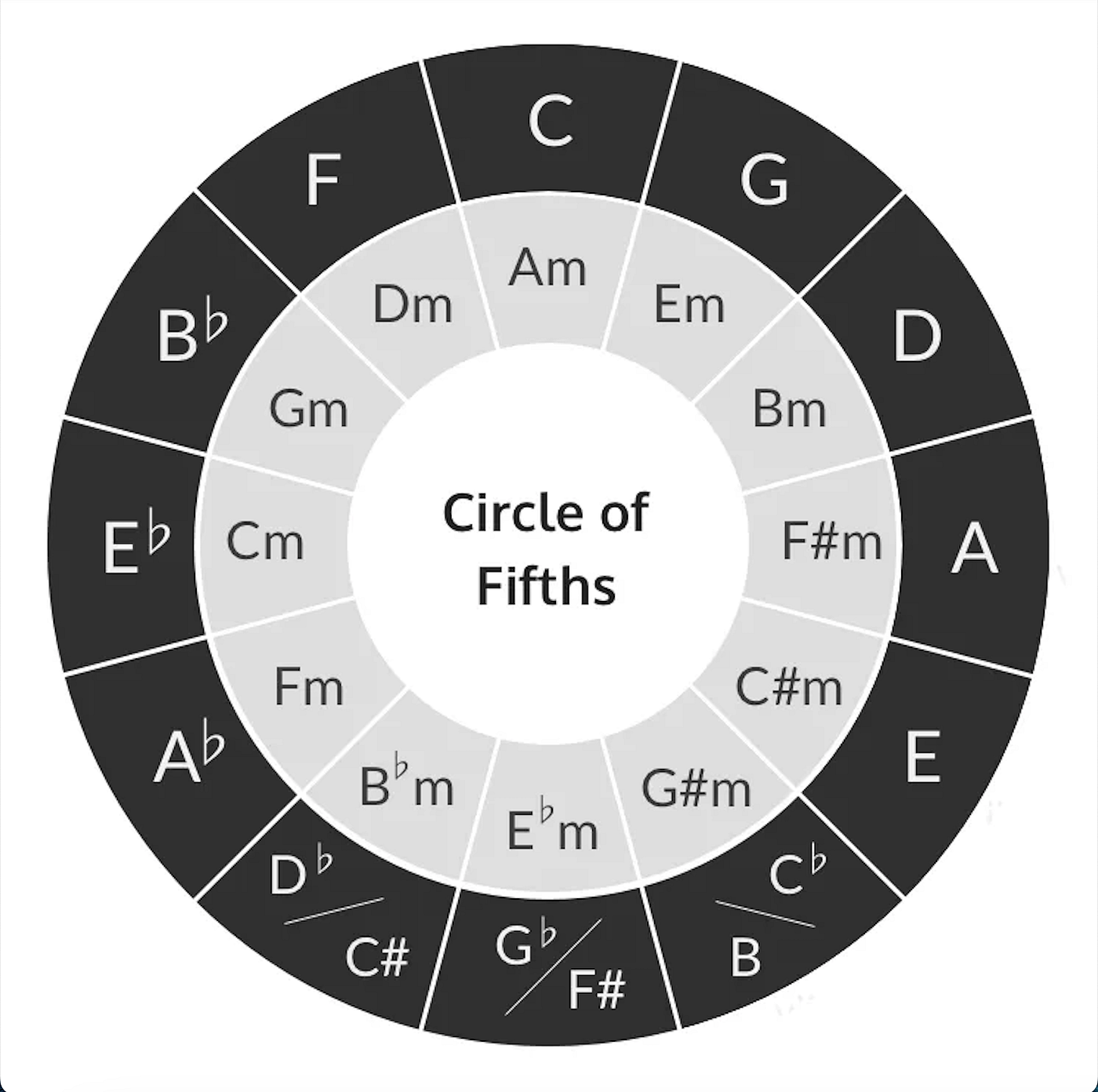
*edit* would help if I read the post properly =)

My theory is basic too but when talking about interval distances I generally use one string and then measure intervals that way. Unless you are speaking chordal or regards tuning the guitar?

You need to remember that there is no extra # or flat note between E&F and B&C so if you drop C down a step. (a step or whole tone is two half notes or two frets away) it's Bb, or F# dropped a whole tone becomes E.

How you would write the tuning in a tab chart or score? Someone who really knows might be along in a minute, but anyway...
Classical music notation doesn't really cope very well with the idea of altered guitar tunings and starts from the point that the notes are the notes (with the clef also affecting what the actual notes played are). So, a classical guitar piece is already written transposed an octave up, and that's so most of the notes the guitar can play will fit on the stave using the treble clef.
At the start of the piece, if there is any alteration to the tuning, it will be written using the string numbers. Usually only noting the strings that are different. (The string numbers are written inside circles, btw, and string 1 is the top E).
1 = D
2 = A
3 = F
4 = C
5 = G
6 = C
...would be what I think you've asked about. That works just as well in tabs or chord charts, but there may be another way that people who work with charts use. I just don't know what it is.
So I wouldn't describe an altered tuning using "intervals". Intervals are alway relative. I'd use what I've written above...
When the guitarist is instructed to use a barre, the notes written are still the notes for that note pitch. So a barre on the 5th fret, playing the top E two frets up from the barre will still be written as a B. The same would be true if the piece uses a capo to get the voicing the composer is looking for.
That can be confusing if you play with other guitarists. The mate I do open mics with often uses a capo so he can play cowboy chords in different keys. He thinks of them as though he's still in standard tuning. So I'll be playing a Gm and he'll be capoed at the 3rd fret and calling it Em...
Classical music notation doesn't really cope very well with the idea of altered guitar tunings and starts from the point that the notes are the notes (with the clef also affecting what the actual notes played are). So, a classical guitar piece is already written transposed an octave up, and that's so most of the notes the guitar can play will fit on the stave using the treble clef.
At the start of the piece, if there is any alteration to the tuning, it will be written using the string numbers. Usually only noting the strings that are different. (The string numbers are written inside circles, btw, and string 1 is the top E).
1 = D
2 = A
3 = F
4 = C
5 = G
6 = C
...would be what I think you've asked about. That works just as well in tabs or chord charts, but there may be another way that people who work with charts use. I just don't know what it is.
So I wouldn't describe an altered tuning using "intervals". Intervals are alway relative. I'd use what I've written above...
When the guitarist is instructed to use a barre, the notes written are still the notes for that note pitch. So a barre on the 5th fret, playing the top E two frets up from the barre will still be written as a B. The same would be true if the piece uses a capo to get the voicing the composer is looking for.
That can be confusing if you play with other guitarists. The mate I do open mics with often uses a capo so he can play cowboy chords in different keys. He thinks of them as though he's still in standard tuning. So I'll be playing a Gm and he'll be capoed at the 3rd fret and calling it Em...

spev11 said:My theory is currently quite basic (i'm reading and watching online instruction) so this will seem pretty daft to nearly everyone else.
Assuming standard tuning etc if I want to drop from Standard E to Standard D then using only the E to D drop how would it be written? E up to D is m7 (I think) so is E down to D is m2 down? Or is it still m7 but coming from the octave?
A minor interval is one fret, a major interval is two frets.
A Minor 7th leaves a gap of a Major 2nd up to complete the octave.
That’s the case with all intervals. A major 6th has a gap of a minor 3rd up to the octave. A minor 2nd has a gap of a major 7th up to the octave.
I've re thought the question with relation to what I'm looking at
so E string down tuned to D how would you write that interval?
so E string down tuned to D how would you write that interval?
got it, ta very much allviz said:spev11 said:My theory is currently quite basic (i'm reading and watching online instruction) so this will seem pretty daft to nearly everyone else.
Assuming standard tuning etc if I want to drop from Standard E to Standard D then using only the E to D drop how would it be written? E up to D is m7 (I think) so is E down to D is m2 down? Or is it still m7 but coming from the octave?A minor interval is one fret, a major interval is two frets.So a m7 upwards leaves a gap of M2 up to the octave.That’s the case with all intervals. A major 6th has a gap of a minor 3rd up to the octave. A minor 2nd has a gap of a major 7th up to the octave.
its all good but sometimes the learning curve is like running up a ski jump
The interval from the E to the D below it is a major 2nd. Or a tone for shorthand.spev11 said:I've re thought the question with relation to what I'm looking at
so E string down tuned to D how would you write that interval?

I agree. I think what's doing @spev11 's head in is that the notes repeat in each octave. So you can go down a major 2nd from E to D... but can also go up a minor 7th to D! But they aren't the same D's, are they?viz said:The interval from the E to the D below it is a major 2nd. Or a tone for shorthand.spev11 said:I've re thought the question with relation to what I'm looking at
so E string down tuned to D how would you write that interval?

Although it's rarely practical to use these, each octave has a number, as well. Maybe this will help spev11 understand how people talk intervals? Each octave starts on the note of C, so for example B2 is below C3. The six-string guitar is tuned to E2, A2, D3, G3, and E4 and goes up to E6 on a 24-fret instrument, higher with bends or vibrato bridge shenanigans.
Yep. Scale comes from the Italian, Scala, which means ladder. There are 12 rungs (frets) between each octave, and the octaves stack on top of each other. The whole ladder is infinitely long. So yep, going up a minor 7th is the same as going down a major 2nd, but you're at a different octave.
Cheers all, I was stuck with only going up from e to the next octave ( or whatever I started on) needed a jolt of information to push me the right direction.
As always this forum provides
As always this forum provides

The way I think is to keep the written music the same and make a note of the tuning used on the music sheet.
So even if you are in drop e flat, write down the string tunings and if the song needs you to play a note on the 5th string at the third fret, call that C, even though secretly, it's not, just keep it a secret and you won't have to transpose anything ever again.
So even if you are in drop e flat, write down the string tunings and if the song needs you to play a note on the 5th string at the third fret, call that C, even though secretly, it's not, just keep it a secret and you won't have to transpose anything ever again.
Right, so like some people do with a capo. They put a capo on the 5th fret, play a D chord and call it A, because it’s shaped like an open A.
The guitar is already a transposing instrument, you're just transposing it by 13 semitones rather than 12!Al_Nico said:The way I think is to keep the written music the same and make a note of the tuning used on the music sheet.
So even if you are in drop e flat, write down the string tunings and if the song needs you to play a note on the 5th string at the third fret, call that C, even though secretly, it's not, just keep it a secret and you won't have to transpose anything ever again.
That's the thinkingviz said:Right, so like some people do with a capo. They put a capo on the 5th fret, play a D chord and call it A, because it’s shaped like an open A.
That's right. My first instrument was a b flat cornet. Still have no idea why they didn't just make them a bit shorter so they played the right note?carlos said:The guitar is already a transposing instrument, you're just transposing it by 13 semitones rather than 12!Al_Nico said:The way I think is to keep the written music the same and make a note of the tuning used on the music sheet.
So even if you are in drop e flat, write down the string tunings and if the song needs you to play a note on the 5th string at the third fret, call that C, even though secretly, it's not, just keep it a secret and you won't have to transpose anything ever again.
Assuming standard tuning etc if I want to drop from Standard E to Standard D then using only the E to D drop how would it be written? E up to D is m7 (I think) so is E down to D is m2 down? Or is it still m7 but coming from the octave?